
September 27, 2023
Cosmetic Dentistry
A bright, dazzling smile has the power to boost confidence and leave a lasting impression. In the pursuit of a radiant grin, teeth whitening has become a popular cosmetic dental procedure. But beyond the quest for pearly whites lies the art and science of teeth whitening. In this article, we will delve into the world of teeth whitening, unraveling the secrets behind this transformative process, and understanding how it combines both artistic and scientific elements to create a brilliant smile.
The Desire for Whiter Teeth
The desire for whiter teeth is not a new phenomenon. Throughout history, various cultures have used different methods to enhance the whiteness of their teeth. Today, teeth whitening has evolved into a safe and effective cosmetic dentistry procedure that can significantly improve the appearance of teeth.
The Science Behind Teeth Whitening
Teeth whitening is grounded in the principles of dental science. It primarily targets two types of stains on teeth:
- Extrinsic Stains: These are stains that occur on the outer surface of the teeth and are often caused by substances like coffee, tea, red wine, and tobacco. Extrinsic stains respond well to teeth whitening procedures.
- Intrinsic Stains: Intrinsic stains are more challenging to treat as they originate from within the tooth’s structure. These stains can result from factors like aging, certain medications, or dental trauma. Teeth whitening can still help, but the results may vary.
Whitening Agents and Techniques
Teeth whitening procedures typically involve the use of whitening agents to break down and remove stains. The most common whitening agents used are hydrogen peroxide or carbamide peroxide. These agents work by penetrating the enamel and dentin layers of the tooth to break apart stain molecules, ultimately leading to a brighter appearance.
There are two main techniques for teeth whitening:
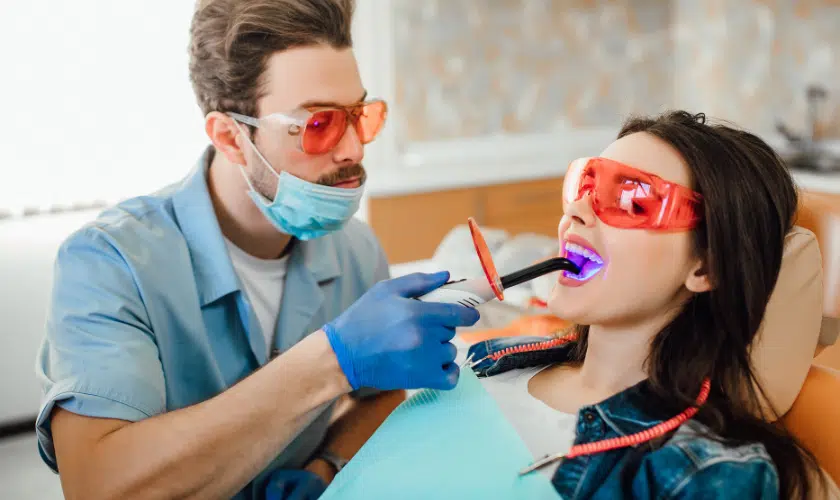
- In-Office Whitening: This method involves a dentist applying a high-concentration whitening gel to the teeth and often using a special light or laser to enhance the whitening process. In-office whitening offers fast and dramatic results.
- At-Home Whitening: For at-home whitening, a dentist provides custom-made trays and a lower-concentration whitening gel. Patients wear these trays for a specified period each day. While it takes longer to achieve results compared to in-office whitening, it allows for more flexibility and convenience.
The Artistic Element of Teeth Whitening
Beyond the science lies the artistic aspect of teeth whitening. Achieving the perfect shade of white requires careful consideration of factors like:
- Natural Tooth Color: Dentists must take into account a patient’s natural tooth color, ensuring that the final shade appears natural and harmonious with the rest of their teeth.
- Skin Tone and Facial Features: A skilled dentist considers the patient’s skin tone, lip color, and facial features when determining the ideal shade for teeth whitening. This personalized approach ensures a smile that enhances the overall appearance.
- Customization: Teeth whitening is not a one-size-fits-all process. The artistic touch comes from customizing the treatment to meet the patient’s aesthetic goals while maintaining a balanced and natural look.
- Safety: Dentists also prioritize the safety of the patient’s oral health during the whitening process, ensuring that the procedure is both effective and harmless.
Maintaining Whitened Teeth
Teeth whitening results are not permanent and can be influenced by lifestyle factors. To prolong the effects of teeth whitening:
- Practice Good Oral Hygiene: Regular brushing and flossing help prevent the buildup of new stains.
- Watch Your Diet: Limit consumption of staining beverages like coffee, tea, and red wine, and avoid tobacco products.
- Regular Check-ups: Visit your dentist for routine check-ups and touch-up whitening sessions, if necessary.
Considerations and Precautions
Teeth whitening is generally safe, but there are considerations and precautions to keep in mind:
- Tooth Sensitivity: Some people may experience temporary tooth sensitivity or gum irritation after whitening. This usually subsides shortly after treatment.
- Gum Protection: During in-office whitening, the dentist will protect your gums and soft tissues to minimize irritation.
- Consultation: It’s important to consult with a dentist before pursuing teeth whitening to ensure it’s a suitable option for your dental health.
Conclusion
Teeth whitening combines the artistry of aesthetics with the science of dentistry to deliver brilliant and confident smiles. Understanding the principles of teeth whitening, the science behind it, and the artistic considerations involved allows individuals to make informed decisions about enhancing their smiles. Whether through in-office treatments or at-home methods, teeth whitening remains a popular and effective way to achieve a radiant smile that leaves a lasting impression.
Recent Posts
Aug. 19, 2026
Can A Root Canal Save A Severely Damaged Tooth?
Aug. 12, 2026
Can Cosmetic Dentistry Close Gaps Between Teeth?
Aug. 05, 2026
How Do Family Dentists Treat Tooth Decay?
Jul. 29, 2026
How Does Family Dentistry Support Long-Term Oral Health?

Jul. 22, 2026
Can Cosmetic Dentistry Fix Damaged Teeth and Restore Your Perfect Smile?
Catagories
- Cosmetic Dentistry (36)
- Dental Care (21)
- Dental Crowns (3)
- Dental Emergency (20)
- Dental Health (9)
- Dental Implant (2)
- Dental Sealants (3)
- Dentist (7)
- Dentures (3)
- Endodontic Treatment (4)
- Family Dentistry (1)
- General Dentistry (9)
- Invisalign (12)
- Oral Care (11)
- Pediatric Dentistry (5)
- Pediatric Dentistry (2)
- Restorative Dentistry (1)
- Root Canal Therapy (4)
- Smile Makeover (3)
- Teeth Whitening (1)
- Tooth Extraction (8)
- Uncategorized (0)