
December 17, 2025
Pediatric Dentistry
Have you ever noticed a flash of pink in the sink when your child spits out their toothpaste? Or perhaps, during a bedtime story, you caught a glimpse of their gums looking a little more “cherry red” than “pale pink”? If so, you aren’t alone—and you certainly shouldn’t panic!
As a parent, seeing any sign of inflammation in your little one can be startling. But here’s a surprising reality: nearly 50% of children experience some form of gingivitis by the time they are four or five years old, and that number climbs toward 100% by puberty due to hormonal shifts.
While red, swollen gums are incredibly common, they are also a “smoke detector” for your child’s oral health. Today, we’re going to look behind the scenes at how pediatric dentists—the specialists dedicated to tiny smiles—diagnose and treat gum inflammation to keep your child’s mouth healthy for life.
The Hard Facts: Pediatric Gum Health by the Numbers
Before we dive into the “how,” let’s look at the “why” and “who.” Gum disease in children isn’t just a lack of brushing; it’s a complex issue influenced by age, genetics, and even socioeconomic factors.
- The 50% Threshold: By age 9, half of all U.S. children have had cavities, which are often the precursor to the plaque buildup that causes gum inflammation.
- The Puberty Peak: Hormonal surges during adolescence increase blood flow to the gums, making them more sensitive to plaque. This is why gingivitis rates peak during the middle school years.
- The Brushing Gap: According to recent studies, roughly 36.8% of school-aged children report never or rarely brushing their teeth, providing a perfect environment for bacterial growth.
- The “Reversible” Window: The good news? Unlike adult periodontitis (which involves bone loss), pediatric gingivitis is almost 100% reversible when caught early.
Why Pediatric Dentists Are Your Best First Call
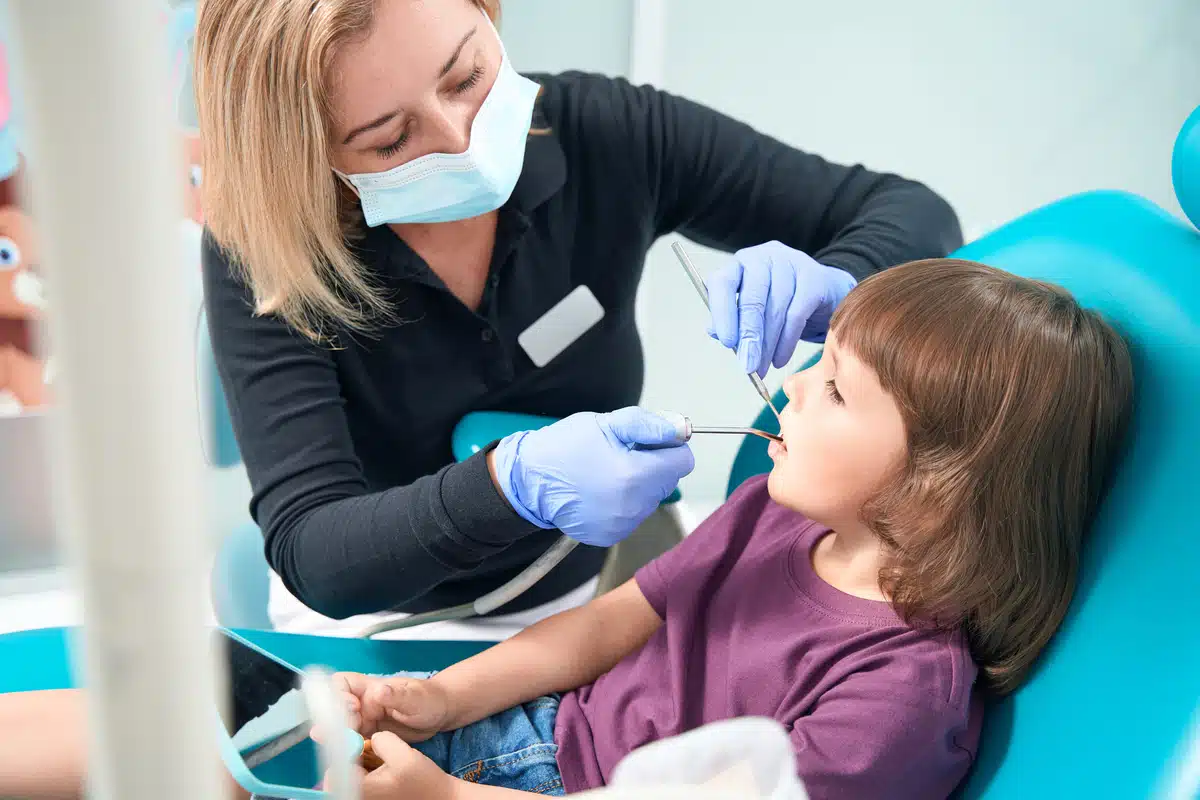
Pediatric dentists in Lee’s Summit specialize in the care of children’s teeth, gums, and mouths from infancy through adolescence. They’re trained not just in clinical treatment but also in making your child feel comfortable and stress-free during visits.
Here’s what they look for when checking for gum inflammation:
- Bright red or swollen gums
- Bleeding during brushing or flossing
- Tenderness or sensitivity
- Bad breath that doesn’t go away
- Gums that seem to pull away from teeth
These symptoms can sometimes occur even without pain, so regular dental check-ups every six months are key to catching issues early.
Common Causes of Red Gum Inflammation in Children
There’s no single reason a child might develop inflamed gums. Some of the most common causes include:
Poor Oral Hygiene
Young children often don’t brush or floss effectively on their own. Plaque buildup near the gumline irritates tissue, leading to inflammation.
Diet
Frequent consumption of sugary snacks and drinks feeds plaque-forming bacteria, increasing the risk of gum inflammation.
Hormonal Changes
Adolescents can experience more sensitive gums due to hormonal shifts that happen around puberty—which means a once-healthy routine might suddenly not be enough.
Mouth Breathing
Kids who breathe through their mouths may have drier gums and less saliva to wash away bacteria, which can increase the risk of inflammation.
Inconsistent Dental Visits
Skipping regular cleanings makes it easier for plaque to harden into tartar, which only professional tools can safely remove.
How Pediatric Dentists Treat Red Gum Inflammation
Good news—most cases of red gum inflammation in kids are reversible when caught early and treated properly! Treatment is usually a combination of professional care and at-home habits.
Let’s look at what that usually includes:
Professional Cleaning
When you arrive at the dentist, the first step is often a thorough cleaning. This removes plaque and tartar buildup that can’t be eliminated through brushing alone.
- Scaling: Removes plaque and tartar from above and just below the gumline.
- Polishing: Smooths the tooth surface, making plaque less likely to stick.
These procedures reduce irritation and allow healthy gum tissue to begin healing.
Regular professional cleanings—typically twice a year—can prevent gingivitis and are essential for reversing early inflammation.
Improving Home Oral Hygiene
Your child’s dentist will demonstrate proper brushing and flossing techniques and may recommend specific tools:
- Soft-bristled toothbrush (kid-sized)
- Fluoride toothpaste is appropriate for your child’s age
- Floss picks or water flossers to help kids reach tricky spots
- ADA-approved antimicrobial mouthwash if age-appropriate
Helping your child brush twice daily for two minutes and floss once a day can dramatically reduce plaque buildup—and inflammation.
Antimicrobial Rinses or Medication
In some cases where home care and cleaning aren’t enough, pediatric dentists may prescribe a gentle antimicrobial mouth rinse, such as 0.12% chlorhexidine, or use temporary rinses to reduce bacterial load around the gums.
Antibiotics are rarely needed for mild gingivitis, but in more severe or persistent cases, the dentist may consider other medications to help control infection.
Deep Cleaning (Scaling & Root Planing)
If plaque has hardened into tartar significantly below the gumline, a deeper cleaning called scaling and root planing may be performed. This helps remove bacteria from deeper pockets and promotes reattachment of the gums to the teeth.
This procedure is more common in advanced cases or in adolescents with plaque buildup that regular cleaning can’t resolve.
Patient & Parent Education
Pediatric dentists don’t just treat—they teach. They’ll coach you and your child on:
- How to brush correctly
- How to floss without causing pain
- What foods help or harm gum health
- When to ask for dental help between visits
This education is a significant part of preventing recurrence in the long term.
How Long Does It Take to Heal?
The good news? When gingivitis is mild, gum inflammation can begin to improve within 1–2 weeks once proper oral hygiene and professional treatments are started.
Of course, every child is different. Persistent or severe inflammation may take longer and require follow-ups every few months until healthy gum tissue returns.
What Happens If You Don’t Treat It?
You might be wondering: “Is this a crisis or just a phase?” Most of the time, red gums in kids aren’t dangerous—but they are a sign that something needs attention.
If untreated, gingivitis can progress to more serious conditions, such as periodontitis, in which infection can damage the bone and connective tissue that support the teeth.
Thankfully, destructive periodontal disease is uncommon in children compared with adults, but it still happens—especially during late adolescence if inflammation is ignored.
Tips for Preventing Gum Inflammation at Home
Here’s how you can help your child keep gums healthy between dental visits:
- Brush twice a day (morning + night)
- Use soft toothbrushes and fluoride toothpaste.
- Floss daily (or use kid-friendly devices)
- Limit sugary snacks and sodas.
- Keep regular dental appointments every 6 months.
- Drink plenty of water throughout the day
Conclusion
Red, inflamed gums in children are a standard signal that the mouth’s ecosystem is out of balance. Whether it’s caused by a new tooth coming in, a missed week of flossing, or the hormonal shifts of the “tween” years, the solution is always the same: Early Intervention. By visiting a qualified dentist in Lee’s Summit, you aren’t just getting a cleaning; you are getting a specialized diagnosis that ensures your child’s permanent “adult” smile has a healthy, strong foundation to grow into. Remember, healthy gums don’t bleed—and with the proper care, your child’s “red alert” can be resolved quickly and comfortably.
Frequently Asked Questions
- At what age do kids start getting gum disease?
Children can show signs of gingivitis as early as preschool years, but it becomes more common in late childhood and adolescence due to hormonal shifts. - Can red gums go away on their own?
Mild inflammation may improve with excellent brushing and flossing, but professional care ensures thorough cleaning and prevents progression. - Is it normal for gums to bleed sometimes?
Occasional bleeding can occur, but regular bleeding during brushing or flossing is a sign of gingivitis that needs evaluation. - Are electric toothbrushes better for kids?
Some studies suggest electric toothbrushes help remove plaque more effectively, but consistency in brushing twice a day matters most. - When should I make a dentist appointment?
If you see persistent redness, swelling, or bleeding that lasts more than a few days—even with good brushing—schedule an appointment soon. Early treatment helps prevent inflammation from worsening.
Recent Posts
Aug. 19, 2026
Can A Root Canal Save A Severely Damaged Tooth?

Aug. 12, 2026
Can Cosmetic Dentistry Close Gaps Between Teeth?
Aug. 05, 2026
How Do Family Dentists Treat Tooth Decay?
Jul. 29, 2026
How Does Family Dentistry Support Long-Term Oral Health?

Jul. 22, 2026
Can Cosmetic Dentistry Fix Damaged Teeth and Restore Your Perfect Smile?
Catagories
- Cosmetic Dentistry (36)
- Dental Care (21)
- Dental Crowns (3)
- Dental Emergency (20)
- Dental Health (9)
- Dental Implant (2)
- Dental Sealants (3)
- Dentist (7)
- Dentures (3)
- Endodontic Treatment (4)
- Family Dentistry (1)
- General Dentistry (9)
- Invisalign (12)
- Oral Care (11)
- Pediatric Dentistry (2)
- Pediatric Dentistry (5)
- Restorative Dentistry (1)
- Root Canal Therapy (4)
- Smile Makeover (3)
- Teeth Whitening (1)
- Tooth Extraction (8)
- Uncategorized (0)