

September 14, 2026
General Dentistry
Have you ever had a tooth that suddenly became painful when you bit down? Maybe hot coffee caused a sharp jolt, or a tooth that had been bothering you for weeks suddenly became much more sensitive. If your dentist tells you that the tooth is infected and recommends a root canal, you may immediately wonder: What actually happens during the treatment? Will it hurt? Can the tooth be saved?
These are common questions, and understanding the process can make the recommendation feel much less intimidating.
A root canal treats infection or inflammation inside a tooth while preserving the natural tooth whenever possible. The American Association of Endodontists explains that treatment involves removing infected or inflamed pulp, cleaning and disinfecting the root canals, then filling and sealing the space. The tooth is subsequently restored so it can continue functioning.
At Hurd Family Dental in Lee’s Summit, Missouri, root canal therapy is one of the services available to patients dealing with infected or damaged teeth. The practice focuses on comfortable, personalized dental care for families throughout Lee’s Summit and surrounding communities.
But why does a tooth become infected in the first place, and how does a dentist remove the infection?
What Causes a Tooth to Become Infected?
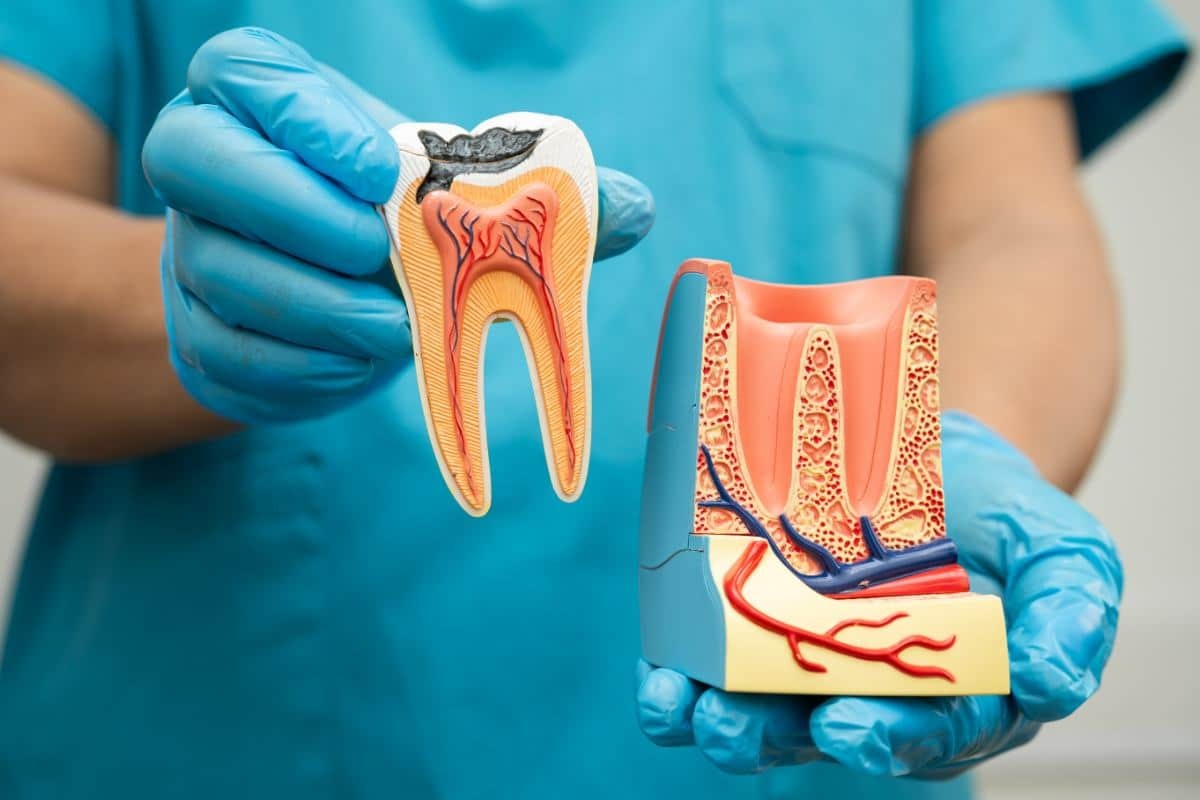
Inside every healthy tooth is a soft area called the dental pulp. It contains nerves, blood vessels, and connective tissue. Under normal circumstances, the pulp helps the tooth develop and remain healthy.
Problems begin when bacteria reach this inner part of the tooth.
Deep tooth decay is a common cause. A cavity can gradually move through the enamel and dentin until it reaches the pulp. A cracked or fractured tooth can also allow bacteria to enter. Previous dental procedures or trauma may also damage the pulp.
The CDC reports that 21% of adults ages 20 to 64 have at least one untreated cavity. Among adults 65 and older, about 1 in 6 has an untreated cavity.
As decay progresses, a simple filling may eventually no longer be enough. If bacteria reach the pulp and cause irreversible inflammation or infection, a dentist may recommend root canal therapy.
What Are the Signs of an Infected Tooth?
An infected tooth doesn’t always cause the same symptoms in every patient.
You may experience:
- Persistent toothache
- Sensitivity to hot or cold
- Pain when biting or chewing
- Swollen or tender gums
- A pimple-like bump on the gum
- Darkening or discoloration of the tooth
- Pain that radiates toward the jaw, ear, or face
- Bad taste or drainage near the tooth
- Facial or jaw swelling
However, the absence of pain does not necessarily mean an infection is gone.
The American Association of Endodontists notes that an infected tooth or abscess may sometimes be painful, but it can also occur without obvious pain. A dental professional should evaluate ongoing symptoms.
That is one reason regular dental examinations matter. A dentist may identify a problem before it develops into severe pain.
Step 1: The Dentist Examines the Tooth
Before beginning root canal therapy, your dentist needs to determine what is causing the problem.
The examination may include checking the tooth for sensitivity, evaluating the surrounding gums and tissues, and taking dental X-rays or other appropriate images. These diagnostic steps help the dentist understand the condition of the tooth and the surrounding bone.
The goal is to answer several important questions:
- Is the pulp infected or severely inflamed?
- Can the natural tooth be saved?
- How many root canals does the tooth have?
- Is there an abscess or infection around the root?
- Is a root canal the appropriate treatment?
The answers help your dentist develop a treatment plan specific to your tooth.
Step 2: The Tooth Is Numbed
One of the biggest concerns patients have about root canal therapy is pain.
Modern dental anesthesia allows dentists to numb the area before treatment begins. Once the tooth and surrounding tissues are adequately anesthetized, you should not feel the sharp sensations associated with the procedure.
The American Association of Endodontists reports that modern root canal treatment is generally designed to relieve dental pain and save teeth. It also notes that patients receiving root canal treatment with modern techniques and anesthesia may report less discomfort than patients undergoing extraction.
If you are anxious about dental treatment, tell your dentist before the procedure begins. Communication allows your dental team to address your concerns and discuss ways to make treatment more comfortable.
Step 3: The Dentist Accesses the Inside of the Tooth
Once the area is numb, the dentist creates a small opening in the tooth to reach the infected or inflamed pulp.
This allows access to the internal chamber and root canals.
The pulp contains the tooth’s nerves and blood vessels. Once the pulp becomes irreversibly infected or inflamed, it cannot heal itself the way a minor surface injury might.
Root canal treatment removes the affected tissue while preserving the tooth’s outer structure.
Step 4: The Infected Pulp Is Removed
The dentist carefully removes the damaged or infected pulp from inside the tooth.
This is the central part of root canal therapy.
Removing the infected tissue eliminates the primary source of bacteria and inflammation inside the tooth. The dentist then prepares the internal spaces for thorough cleaning.
Hurd Family Dental explains that its root canal treatment involves removing infected dental pulp and tooth nerves before cleaning and filling the tooth.
The objective is not simply to stop the pain temporarily. The treatment is intended to address the underlying infection while allowing the natural tooth to remain in place.
Step 5: The Root Canals Are Cleaned and Disinfected
After the dentist removes the infected pulp, they clean and disinfect the internal root canal system.
Root canals can be narrow and complex. Careful cleaning and shaping help remove remaining infected material and prepare the canals for sealing.
The American Association of Endodontists describes this stage as cleaning, disinfecting, and shaping the canals before filling them.
This step is critical because the goal is to reduce bacteria and create an environment in which the tooth can heal.
Step 6: The Canals Are Filled and Sealed
After cleaning the canals, the dentist fills and seals the internal space.
The American Association of Endodontists explains that a rubber-like material called gutta-percha is commonly used to fill and seal the cleaned root canals. The seal helps prevent bacteria from re-entering the treated space.
Hurd Family Dental similarly describes filling the cleaned tooth with a medicated, rubber-like material as part of its root canal therapy.
Sealing the canals is an important part of preventing reinfection.
Step 7: The Tooth Is Restored
Completing the root canal does not necessarily mean the treatment is finished.
After the infected pulp is removed and the canals are sealed, the tooth needs restoration. Depending on the amount of remaining tooth structure and the tooth’s location, the dentist may recommend a filling or dental crown.
A restoration protects the treated tooth and helps restore its normal function.
The American Association of Endodontists notes that after root canal treatment, the tooth is restored with a crown or filling for protection and can continue functioning like a natural tooth.
Following your dentist’s instructions for the final restoration is important. A root-treated tooth still needs protection from everyday chewing forces.
Why Save the Natural Tooth?
When an infected tooth can be treated predictably, preserving it may offer important advantages.
Your natural teeth work together when you chew and speak. Keeping the original tooth can also help maintain the surrounding teeth and supporting structures.
The American Association of Endodontists states that root canal treatment in Lee’s Summit can help patients keep their natural teeth and avoid extraction and subsequent replacement. With proper care, many root-treated teeth can last for many years and potentially a lifetime.
That does not mean every infected tooth can be saved. A tooth with extensive structural damage, certain fractures, or other complications may require extraction. Your dentist can determine whether root canal therapy is appropriate.
What Happens if an Infected Tooth Is Not Treated?
It can be tempting to wait if the pain disappears.
Unfortunately, pain that disappears does not necessarily mean the infection has resolved.
The CDC explains that when a cavity reaches the nerve inside a tooth, it can cause an infection or abscess. An untreated abscess can spread beyond the tooth and, although rare, may result in serious complications.
An infected tooth may also become increasingly difficult to restore as the problem progresses.
That is why it is better to have persistent tooth pain, swelling, or sensitivity evaluated rather than waiting for symptoms to become severe.
Does Every Toothache Need a Root Canal?
No.
Tooth pain can have many causes, and a root canal is appropriate only when the pulp has become irreversibly inflamed or infected, or when another endodontic condition requires treatment.
A toothache could instead be related to:
- A cavity that can be treated with a filling
- Gum disease
- A cracked tooth
- Tooth sensitivity
- A loose or damaged restoration
- Teeth grinding or clenching
- Sinus-related discomfort
- An injury
That is why professional diagnosis matters.
Your dentist may recommend an examination and dental imaging before deciding whether root canal therapy is necessary.
How Long Does Root Canal Treatment Take?
Treatment time varies by tooth and infection complexity.
Front teeth generally have fewer canals than many back teeth, while molars can have several canals and more complicated anatomy. Infection, previous dental work, unusual root anatomy, or other factors may also affect treatment.
Some root canals can be completed in one visit, while others may require additional appointments.
After examining your tooth, your dentist can explain the expected timeline.
Is Root Canal Treatment Painful?
The procedure itself is performed with local anesthesia to keep you comfortable.
It is normal for a treated tooth to feel somewhat tender after the procedure, particularly if the area was infected or inflamed before treatment. This discomfort is usually manageable and should improve.
The American Association of Endodontists emphasizes that root canal treatment is intended to relieve dental pain and save the natural tooth.
If pain becomes severe, swelling develops, or symptoms worsen after treatment, contact your dentist promptly.
What Can You Do After a Root Canal?
Follow your dentist’s instructions carefully after treatment.
You may be advised to avoid chewing hard foods on the treated tooth until the permanent restoration is completed. Continue brushing and cleaning between your teeth as recommended.
You should also maintain regular dental visits.
A root-treated tooth can still develop decay or problems around its restoration. Protecting your teeth with good oral hygiene and routine professional care remains important.
How Common Are Dental Problems That Can Lead to Root Canals?
Tooth decay remains one of the most common oral-health conditions in the United States.
The CDC reports that 50% of children ages 6 to 9 have had cavities, while 10% of adolescents ages 12 to 19 have at least one untreated cavity. Among adults ages 20 to 64, approximately 21% have at least one untreated cavity.
These numbers show why preventive dental care matters.
Regular examinations can help identify cavities while they are still small enough to treat with more conservative methods.
When Should You Call a Lee’s Summit Dentist?
Do not ignore symptoms that could indicate an infection.
Contact your dentist if you experience persistent tooth pain, swelling, pain when chewing, prolonged sensitivity, a bad taste, drainage, or a damaged tooth.
Severe swelling involving the face or neck, difficulty breathing or swallowing, or other signs of a potentially serious infection require urgent medical attention.
For less severe but persistent dental symptoms, a prompt dental evaluation can help determine the cause and appropriate treatment.
Root Canal Therapy at Hurd Family Dental
At Hurd Family Dental, root canal therapy is provided as part of the practice’s restorative and general dental services in Lee’s Summit. The practice states that its goal is to help patients preserve natural teeth, relieve pain from infection, and prevent infection from spreading to other areas of the mouth.
Dr. Francis Hurd is a dentist at Hurd Family Dental. The practice has served Lee’s Summit and surrounding communities since 2009 and emphasizes individualized, comfortable dental care for patients and families.
If you have been told that you need a root canal, you do not have to make the decision based on fear or internet myths. A dental examination can show what is happening inside the tooth and whether root canal therapy is the appropriate way to save it.
Schedule an Appointment with Hurd Family Dental to discuss tooth pain, infection, or your root canal treatment options.
Visit Our Dental Practice
Hurd Family Dental is located at 410D SE 3rd Street, Lee’s Summit, MO 64063. The practice provides general, family, emergency, cosmetic, pediatric, and restorative dental services.
Visit our dental practice in Lee’s Summit and talk with Dr. Francis Hurd about your dental concerns and treatment options.
Conclusion
An infected tooth does not necessarily have to be removed.
Root canal therapy lets dentists remove infected pulp, clean and disinfect the internal root canals, seal the tooth, and restore it so it can keep functioning. The American Association of Endodontists describes root canal treatment as a predictable way to treat infected or inflamed pulp while preserving the natural tooth whenever possible.
The key is not to wait until an infection becomes severe. With 21% of U.S. adults ages 20 to 64 experiencing untreated cavities, dental decay remains a widespread problem that can progress when treatment is delayed.
If you have persistent tooth pain, sensitivity, swelling, or another concerning symptom, schedule an examination. At Hurd Family Dental in Lee’s Summit, Dr. Francis Hurd can evaluate your tooth and explain whether root canal therapy or another treatment is appropriate.
Frequently Asked Questions
1. How does a dentist know if I need a root canal?
Your dentist evaluates your symptoms, examines the tooth, and may use dental X-rays or other diagnostic tests. A root canal may be recommended when the pulp is irreversibly inflamed or infected.
2. Can an infected tooth be treated without removing it?
Often, yes. Root canal therapy can remove infected pulp while preserving the remaining natural tooth. However, some severely damaged teeth may not be suitable for root canal treatment.
3. How long does a root canal take to heal?
The timeline varies by tooth and infection severity. Mild tenderness after treatment can occur, and the surrounding tissues may take longer to settle fully.
4. Will I need a crown after root canal treatment?
Not every tooth requires the same restoration. Depending on the amount of remaining tooth structure and the tooth’s location, your dentist may recommend a crown or another restoration to protect it.
5. What should I do if my tooth hurts after a root canal?
Some tenderness can be normal after treatment, but report severe or worsening pain, significant swelling, or other unusual symptoms to your dentist promptly.
Recent Posts
Oct. 26, 2026
How Modern Root Canal Therapy Makes Dental Treatment More Comfortable?

Oct. 19, 2026
Family Dentist vs. General Dentist: What’s The Difference?

Oct. 12, 2026
Does Your Child’s Thumb Sucking Need Dental Intervention

Oct. 05, 2026
Tooth Pain at 2:00 AM: Your Real Emergency Options Beyond the ER

Sep. 28, 2026
How Do Taste Changes in The Mouth After Root Canal Therapy?
Catagories
- Cosmetic Dentistry (37)
- Dental Care (21)
- Dental Crowns (3)
- Dental Emergency (22)
- Dental Health (9)
- Dental Implant (2)
- Dental Sealants (3)
- Dentist (7)
- Dentures (3)
- Endodontic Treatment (4)
- Family Dentistry (2)
- General Dentistry (13)
- Invisalign (12)
- Oral Care (10)
- Pediatric Dentistry (2)
- Pediatric Dentistry (6)
- Restorative Dentistry (1)
- Root Canal Therapy (4)
- Smile Makeover (3)
- Teeth Whitening (1)
- Tooth Extraction (8)
- Uncategorized (0)