
September 7, 2026
General Dentistry
Have you ever been told that you need a root canal and immediately wondered, “Could this treatment affect my heart?” If you have heard claims that root canals cause heart disease, it is understandable to have questions before agreeing to treatment.
The good news is that current evidence does not show root canal treatment itself causes heart disease. In fact, root canal therapy removes infected or damaged tissue from inside a tooth, cleans the area, and seals the tooth to help control infection. At Hurd Family Dental in Lee’s Summit, Missouri, we offer root canal therapy to help patients preserve natural teeth and address infections that could otherwise continue to cause problems.
The connection between oral health and cardiovascular health is more complicated. Researchers have investigated whether chronic oral infections, especially periodontal disease and infections around teeth, may be associated with cardiovascular conditions. The American Heart Association’s 2025 scientific statement says periodontal disease is associated with atherosclerotic cardiovascular disease, but it also emphasizes that causality has not been established.
So, can a root canal cause heart disease? Let’s separate the facts from the myths.
Does a Root Canal Cause Heart Disease?
There is currently no good evidence showing that receiving a properly performed root canal causes heart disease.
Some older theories suggested that bacteria remaining inside a root-treated tooth might contribute to systemic disease. However, modern research does not support the simple claim that root canal treatment causes cardiovascular disease.
A systematic review and meta-analysis published in Clinical Oral Investigations examined chronic endodontic infections and cardiovascular disease. The researchers found an association between chronic endodontic infection and cardiovascular disease, with a reported relative risk of 1.38. However, the authors rated the overall quality of evidence as very low and said additional research is needed before establishing a causal relationship.
That distinction is important.
An association does not mean one condition causes the other.
People with chronic dental infections may also have other factors that influence cardiovascular health, such as smoking, diabetes, age, diet, obesity, or existing inflammation.
What About the Infection Inside the Tooth?
The infection that leads to a root canal is more concerning than the root canal procedure itself.
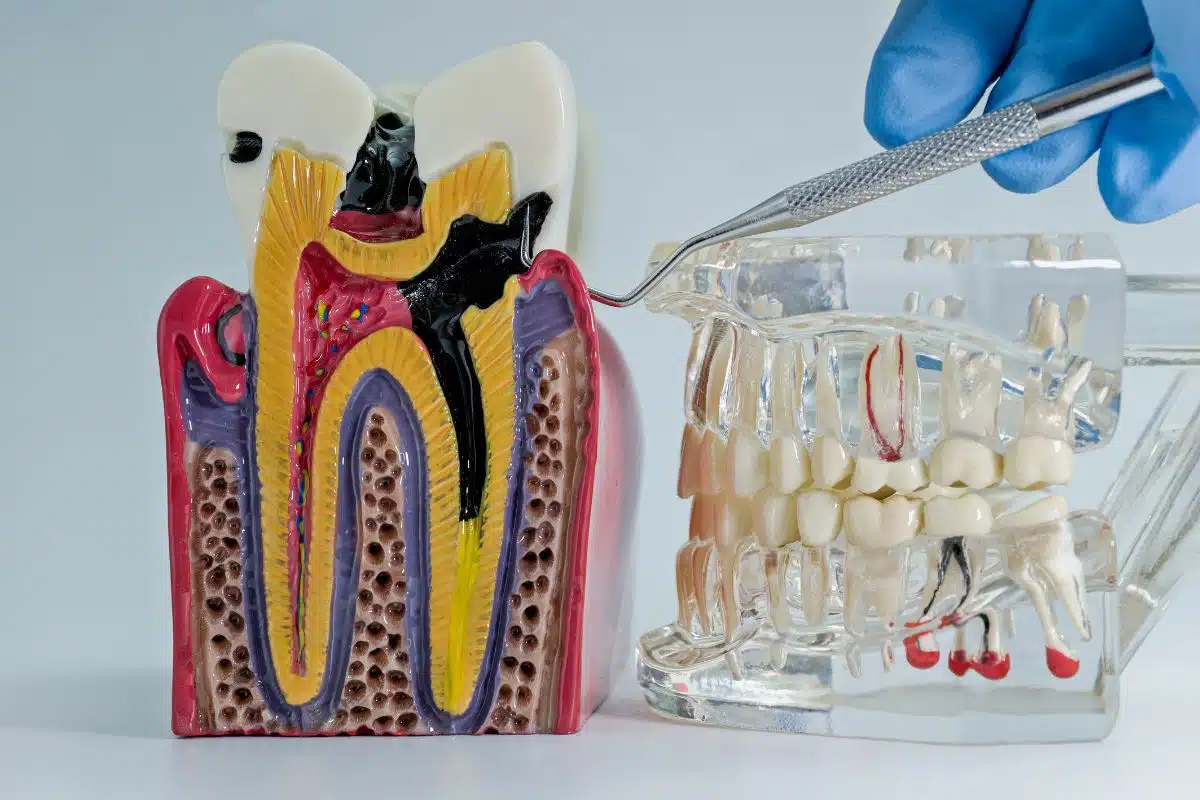
When bacteria reach the pulp, the tissue can become inflamed or infected. Without appropriate treatment, the infection can extend beyond the tooth and affect surrounding tissues.
Hurd Family Dental notes that untreated infection inside a tooth can ultimately lead to tooth death and may require extraction if the tooth cannot be saved. Root canal therapy in Lee’s Summit removes infected tissue and prevents the infection from spreading through surrounding oral structures.
That is why delaying treatment simply because you are worried about the root canal may not be the best approach.
If a dentist recommends root canal treatment, ask why it is necessary, what alternatives exist, and what could happen if you leave the infection untreated.
Is Gum Disease More Closely Connected to Heart Disease?
The strongest current discussion about oral health and cardiovascular disease centers on periodontal disease, rather than root canal treatment itself.
The American Heart Association’s updated 2025 scientific statement reports that periodontal disease affects more than 40% of U.S. adults over age 30. It also describes evidence connecting periodontal disease with cardiovascular conditions, including coronary artery disease, stroke, atrial fibrillation, and heart failure. However, the statement stresses that a direct cause-and-effect relationship has not yet been established.
Periodontal disease involves inflammation and infection of the tissues that surround and support the teeth.
The CDC reports that approximately 4 in 10 U.S. adults age 30 and older had some level of periodontitis based on 2009–2014 surveillance data. The condition becomes more common with age, with approximately 60% of adults age 65 and older affected in that dataset.
These statistics demonstrate why gum health deserves attention as part of overall healthcare.
How Could Oral Health Be Related to Heart Health?
Researchers have proposed several possible explanations.
One possibility is that bacteria enter the bloodstream from inflamed or infected gum tissue. Another involves inflammation. Chronic inflammation associated with periodontal disease may contribute to changes in blood vessels and other cardiovascular processes.
The American Heart Association explains that oral bacteria and gum inflammation can enter the bloodstream and are associated with inflammation throughout the body. It also states that gum disease is linked to a higher risk of heart and blood-vessel disease, while emphasizing that an association does not prove that gum disease causes cardiovascular disease.
This is why maintaining healthy teeth and gums matters beyond preventing cavities and tooth loss.
What Happens if an Infected Tooth Is Left Untreated?
Don’t ignore a tooth infection just because the pain temporarily disappears.
Dental infections can change over time. Pain may decrease even though the underlying problem remains. Depending on the tooth’s condition, untreated infection can damage surrounding bone and tissues and eventually make saving the tooth more difficult.
Hurd Family Dental recommends prompt dental attention for symptoms such as severe tooth pain, swelling, fever, or difficulty opening the mouth. Treatment may include a filling, root canal therapy, or extraction, depending on the tooth’s condition.
This is one reason dentists may recommend root canal therapy when the pulp is infected: the goal is to eliminate the source of infection while preserving the natural tooth whenever possible.
Root Canal Treatment Is Intended to Control Infection
Think about the purpose of the procedure.
A root canal does not introduce bacteria into an otherwise healthy tooth. It is performed because bacteria have already reached the tooth’s inner tissues or the pulp has been severely damaged.
The dentist removes the affected tissue, cleans the internal space, and seals it.
Hurd Family Dental describes root canal treatment as a way to relieve pain, restore oral health, and prevent the infection from spreading to other parts of the mouth.
This makes it inaccurate to describe root canal therapy itself as a cause of heart disease.
Instead, the more appropriate question is whether untreated dental infection or chronic oral inflammation could have broader health implications. Research into that question is ongoing.
Can People With Heart Disease Have Root Canal Treatment?
In many cases, yes. Having heart disease does not automatically mean you cannot receive dental treatment.
However, your dentist needs to know about your medical history.
Tell your dental team if you have been diagnosed with heart disease, have had heart-valve surgery, have certain congenital heart conditions, have previously experienced infective endocarditis, or take medications that could affect dental treatment.
Some patients at particularly high risk of adverse outcomes from infective endocarditis may need preventive antibiotics before certain invasive dental procedures.
The American Heart Association states that antibiotic prophylaxis before certain dental procedures is recommended only for specific high-risk heart patients—not for everyone with a cardiovascular condition.
Never start or stop an antibiotic based solely on information you read online. Your dentist and physician can determine whether preventive medication is appropriate for you.
What Is Infective Endocarditis?
It is important not to confuse heart disease with infective endocarditis.
Infective endocarditis is an infection of the heart’s inner lining or heart valves. It is uncommon but potentially serious.
The American Heart Association notes that good oral hygiene and regular dental care help reduce exposure to bacteria associated with the mouth, and only certain high-risk heart patients are recommended to receive preventive antibiotics before specific invasive dental procedures.
This does not mean that a routine root canal causes endocarditis or heart disease.
It means that patients with certain heart conditions need individualized dental planning.
What Does the Research Say About Cardiovascular Disease and Root Canal Outcomes?
Interestingly, research has also examined the reverse question: whether cardiovascular disease might affect root canal outcomes.
A systematic review of longitudinal studies found that patients with cardiovascular disease had a higher risk of unfavorable endodontic outcomes compared with healthy patients. The reported relative risk was 1.67, although the researchers noted limitations in the available evidence.
This finding does not mean root canals cause cardiovascular disease.
Instead, it suggests that systemic health and dental health can interact in complicated ways. Patients with cardiovascular conditions should therefore make sure their dentist understands their medical history.
Why Treating Dental Infections Matters
A healthy mouth is important for more than your teeth.
The CDC reports that more than 40% of adults experience mouth pain within a year, and more than 80% of people have had at least one cavity by age 34. The agency also emphasizes that oral health is connected with overall health and that many oral diseases can be prevented through professional care and appropriate self-care.
Treating an infected tooth is one component of maintaining good oral health.
Depending on the diagnosis, treatment might involve a filling, root canal, crown, extraction, periodontal therapy, or another approach. The appropriate treatment depends on the individual tooth and the patient’s overall health.
How Can You Protect Your Oral and Heart Health?
You don’t need to worry about every dental procedure to support your overall health.
Instead, focus on proven habits.
Brush your teeth twice a day with fluoride toothpaste, clean between your teeth every day, avoid tobacco, maintain a balanced diet, and keep regular dental appointments.
The CDC recommends brushing twice daily, flossing daily, having at least an annual dental checkup and professional cleaning, and getting additional visits when your dental provider recommends them.
The American Heart Association similarly recommends good oral hygiene, regular dental care, avoiding tobacco, and discussing your oral and cardiovascular health with your healthcare providers.
These basic habits can help reduce your risk of preventable oral-health problems.
When Should You Contact a Dentist?
Do not wait for a routine appointment if you develop symptoms that could indicate an infection.
Contact a dentist if you have persistent tooth pain, sensitivity that doesn’t improve, swelling around a tooth or jaw, pain when biting, a dental injury, fever with dental symptoms, or a bad taste or drainage from the affected area.
Hurd Family Dental provides root canal therapy in Lee’s Summit and describes its approach as focused on patient comfort while treating infected teeth.
Prompt evaluation can help determine whether you need root canal treatment or another type of dental care.
Why Choose Hurd Family Dental for Root Canal Care?
Hurd Family Dental has served patients in Downtown Lee’s Summit and surrounding communities since 2009. The practice provides general, family, cosmetic, pediatric, emergency, and root canal care.
Dr. Francis Hurd graduated from the University of Missouri–Kansas City School of Dentistry in 2005 and has provided dental care in the Kansas City area. He and Dr. Joanna Hurd work together at Hurd Family Dental to provide family-focused dental care.
If you have been told that you need a root canal, the best way to understand your options is to have the tooth evaluated rather than relying on online claims about the procedure.
Schedule an Appointment with Hurd Family Dental to discuss tooth pain, infection, or concerns about root canal treatment.
Visit Our Dental Practice
Hurd Family Dental is located at 410D SE 3rd Street, Lee’s Summit, MO 64063. The practice welcomes patients seeking general, family, emergency, cosmetic, and restorative dental care.
Visit our dental practice in Lee’s Summit to discuss your oral-health concerns with Dr. Francis Hurd and the Hurd Family Dental team.
Conclusion
So, can root canal treatment cause heart disease? Based on current evidence, properly performed root canal treatment itself does not cause heart disease.
The more important health issue is the infection or inflammation that may exist before treatment. Research has identified associations between chronic endodontic infections, periodontal disease, and cardiovascular conditions, but researchers have not established that these dental conditions directly cause heart disease. The American Heart Association specifically emphasizes the difference between association and causation.
A root canal treats an infected or damaged tooth and, when possible, preserves it. If your dentist recommends one, ask questions about the diagnosis, treatment alternatives, expected outcome, and any precautions related to your medical history.
Maintaining good oral hygiene, attending regular dental visits, treating infections promptly, and keeping your dentist informed about heart conditions are practical ways to support your oral health and overall well-being.
Frequently Asked Questions
1. Can having a root canal increase my risk of heart disease?
Current evidence does not establish root canal treatment itself as a cause of heart disease. Research has explored associations between chronic dental infections and cardiovascular disease, but more high-quality research is needed to determine causation.
2. Is a root canal safe if I have heart disease?
Many people with heart disease can receive root canal treatment. However, certain heart conditions may require special precautions. Tell your dentist your full medical history so they can plan your care appropriately.
3. Can an untreated tooth infection affect my health?
An untreated dental infection can spread to surrounding tissues and worsen. A dentist may recommend root canal therapy to remove infected tissue and help preserve the natural tooth.
4. Do I need antibiotics before a root canal if I have a heart condition?
Not necessarily. The American Heart Association recommends preventive antibiotics before certain invasive dental procedures only for patients in specific high-risk categories for infective endocarditis. Your dentist and physician can determine whether prophylaxis is appropriate.
5. How can I protect my teeth and support my overall health?
Brush twice daily, floss daily, avoid tobacco, keep regular dental checkups, and seek prompt treatment for dental problems. Tell your dentist about medical conditions and medications that could affect your dental care.
Recent Posts

Oct. 26, 2026
How Modern Root Canal Therapy Makes Dental Treatment More Comfortable?

Oct. 19, 2026
Family Dentist vs. General Dentist: What’s The Difference?

Oct. 12, 2026
Does Your Child’s Thumb Sucking Need Dental Intervention

Oct. 05, 2026
Tooth Pain at 2:00 AM: Your Real Emergency Options Beyond the ER

Sep. 28, 2026
How Do Taste Changes in The Mouth After Root Canal Therapy?
Catagories
- Cosmetic Dentistry (37)
- Dental Care (21)
- Dental Crowns (3)
- Dental Emergency (22)
- Dental Health (9)
- Dental Implant (2)
- Dental Sealants (3)
- Dentist (7)
- Dentures (3)
- Endodontic Treatment (4)
- Family Dentistry (2)
- General Dentistry (13)
- Invisalign (12)
- Oral Care (10)
- Pediatric Dentistry (2)
- Pediatric Dentistry (6)
- Restorative Dentistry (1)
- Root Canal Therapy (4)
- Smile Makeover (3)
- Teeth Whitening (1)
- Tooth Extraction (8)
- Uncategorized (0)