
November 2, 2026
General Dentistry
A tooth that once looked healthy may gradually become gray, brown, yellow, or even nearly black after root canal treatment. Have you noticed that one of your front teeth looks darker than the surrounding teeth, even though the discomfort that originally brought you to the dentist has disappeared? This change can be surprising, particularly when the treatment was intended to preserve your natural tooth.
For patients in Lee’s Summit, MO, understanding why a tooth changes color after root canal therapy can help determine whether the discoloration is cosmetic or a sign the tooth needs additional attention. Although root canal treatment removes infected or damaged pulp tissue, certain changes inside the tooth can affect its appearance over time.
At Hurd Family Dental, Dr. Francis Hurd knows preserving a natural tooth involves more than treating infection or discomfort. Its appearance, strength, and long-term function also matter. Whether you recently completed root canal therapy or noticed an older treated tooth darkening, understanding the possible causes can help you make informed decisions about your dental care.
Let’s explore why teeth sometimes darken after root canal treatment, what the color changes mean, and which treatment options may help restore a more natural appearance.
Why Teeth Change Color After Root Canal Treatment
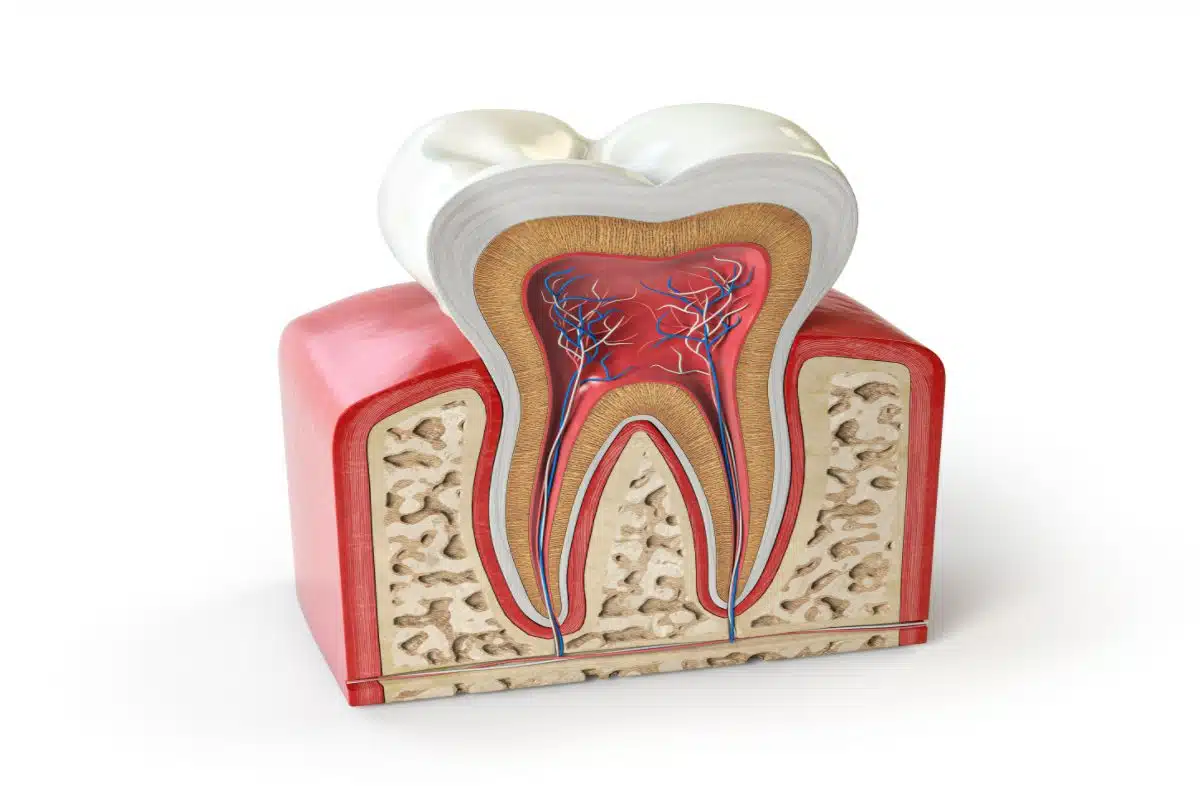
To understand discoloration, it helps to know a little about tooth anatomy. Beneath the hard outer enamel is dentin, a naturally yellowish layer surrounding the dental pulp. The pulp contains nerves, blood vessels, and connective tissue that help nourish a developing tooth.
When infection or inflammation damages the pulp, root canal treatment in Lee’s Summit removes the affected tissue, cleans the internal canals, and seals the space to help prevent further bacterial contamination.
However, removing the pulp does not restore the tooth’s original internal structure or reverse every change that occurred before treatment.
Sometimes, blood pigments, damaged tissue remnants, or dental materials contribute to staining within the dentin. Because these stains develop inside the tooth, regular brushing and conventional whitening toothpaste may not remove them.
According to the American Dental Association (ADA), intrinsic discoloration occurs within the tooth structure and can result from factors such as pulpal bleeding, tissue breakdown, and certain dental materials.
7 Common Reasons a Tooth Turns Dark After Root Canal Treatment
A dark tooth does not necessarily mean the root canal procedure failed. Several factors can contribute to discoloration, and identifying the underlying cause is essential before choosing treatment.
1. Blood Pigments Remain Inside the Tooth
A common cause of discoloration is bleeding inside the tooth before or during root canal treatment.
When the dental pulp becomes severely inflamed or injured, small blood vessels may rupture. Red blood cells break down and release pigments that can enter the microscopic dentinal tubules.
Over time, these pigments may produce a reddish, brown, or gray appearance.
This is particularly relevant when a tooth has experienced trauma, such as a sports injury, accidental fall, or impact to the mouth.
Even after the damaged pulp has been removed, pigments that have already penetrated the dentin may remain and affect the tooth’s appearance.
2. The Dental Pulp Was Already Damaged Before Treatment
Sometimes, discoloration begins before a patient even receives root canal therapy.
When the pulp becomes infected or dies, tissue breakdown can release substances that gradually stain the surrounding dentin. The longer damaged tissue remains inside the tooth, the more opportunity discoloration may develop.
Patients may notice a gray or brown tooth weeks or months before seeking treatment.
A study involving 255 teeth treated with internal bleaching found that previous trauma accounted for 58.8% of the discoloration cases examined. Previous dental treatment accounted for 23.9%, pulp necrosis for 13.7%, and pulp canal calcification for 3.6%.
These findings demonstrate that discoloration can have several underlying causes, including problems that existed before root canal treatment.
3. Dental Materials Used During Root Canal Treatment
The materials used during root canal therapy are important for cleaning, filling, and sealing the internal canal system. However, some materials may contribute to tooth discoloration.
Certain root canal sealers, medicaments, and filling materials contain ingredients that can interact with dentin and surrounding tissues.
For example, some materials containing bismuth compounds have been associated with discoloration. Other substances may undergo chemical changes that leave visible staining within the tooth.
A research review published in the International Endodontic Journal examined how endodontic procedures, irrigants, medications, and filling materials can contribute to tooth discoloration.
This does not mean that every root canal-treated tooth will become dark. The outcome depends on the materials used, how they interact with the tooth, and the individual clinical circumstances.
4. Small Amounts of Pulp Tissue Remain Inside the Tooth
Root canal treatment involves removing damaged pulp tissue from the pulp chamber and root canals.
However, tiny tissue remnants can sometimes remain in difficult-to-access areas, particularly in the small extensions of the pulp chamber known as pulp horns.
If these remnants break down over time, they may release pigments that penetrate the dentin and cause internal discoloration.
This is one reason careful cleaning of the pulp chamber matters during root canal procedures.
A tooth that becomes darker because of remaining tissue does not automatically indicate active infection. A dental examination is necessary to determine whether the discoloration is related to residual staining, persistent disease, or another issue.
5. The Tooth Has Lost Its Natural Vitality
A tooth that has undergone conventional root canal treatment no longer contains living pulp tissue.
Although this treatment can preserve the natural tooth structure, the tooth may experience changes in appearance because the internal tissues that were previously present have been removed.
The surrounding dentin can also become more noticeable as the tooth’s internal condition changes.
Patients sometimes describe the affected tooth as looking lifeless, dull, gray, or different from neighboring teeth.
A root canal-treated tooth doesn’t necessarily become dark just because it is no longer vital. Discoloration generally involves additional factors, such as previous bleeding, tissue breakdown, or staining from dental materials.
6. An Old Filling or Crown Is Affecting the Appearance
Not every dark tooth after root canal therapy has an internal staining problem.
Sometimes, the restoration covering the tooth causes the visible color difference.
Dental fillings can discolor over time, and older crowns may change as materials age or surrounding gum tissue changes.
A crown may also stop matching the color of neighboring natural teeth, particularly if those teeth have gradually become lighter.
In some cases, the natural tooth structure beneath an existing restoration may have changed color.
A dentist can examine the restoration and determine whether the problem involves the crown, filling, or underlying tooth.
7. The Tooth Did Not Heal as Expected
Although discoloration is often cosmetic, it should not always be ignored.
A previously treated tooth can sometimes develop persistent or recurring infection. This may happen if complicated canal anatomy was missed, bacteria entered through a leaking restoration, or the tooth did not heal as expected.
The American Association of Endodontists (AAE) explains that previously treated teeth can develop new problems months or even years after treatment.
Signs that deserve attention include:
- Persistent or returning tooth pain.
- Swelling around the affected tooth.
- Tenderness when biting or chewing.
- A recurring gum pimple near the tooth.
- Changes in the tooth’s appearance accompanied by discomfort.
A dark tooth without pain does not necessarily indicate treatment failure. However, a professional examination can help rule out underlying complications.
Is It Normal for a Tooth to Turn Gray or Black After a Root Canal?
A treated tooth may become slightly darker than neighboring teeth, but the degree and timing of discoloration can vary.
Different colors may provide clues about what is happening inside the tooth:
| Tooth color | Possible explanation |
| Gray or bluish | Blood pigment breakdown or previous pulp damage |
| Yellow or brown | Internal staining, tissue remnants, or dental materials |
| Dark brown | Long-standing internal discoloration |
| Black or very dark gray | Severe internal staining or other underlying dental problems |
These colors are not definitive diagnoses. Several conditions can produce similar appearances, so a dentist must examine the tooth before recommending treatment.
If you notice a sudden change in tooth color, especially if it’s accompanied by pain or swelling, schedule a dental evaluation rather than assuming it is simply a cosmetic issue.
How Long After Root Canal Treatment Can a Tooth Become Dark?
Discoloration does not always appear immediately after root canal therapy.
Some patients notice a color difference within a few weeks, while others experience gradual darkening over several months or years.
Timing depends on the tooth’s original condition, the amount of internal staining, the materials used during treatment, and the quality of the final restoration.
For example, a tooth that experienced significant trauma before treatment may already contain blood pigments within its dentin. The discoloration may become more noticeable over time.
In other cases, staining associated with dental materials may develop gradually.
If your tooth looks different several months after treatment, don’t assume the original procedure was unsuccessful. A dental examination can help distinguish between internal staining, restoration-related changes, and possible healing complications.
Can a Dark Tooth After Root Canal Treatment Be Whitened?
Yes. In many cases, a darkened root canal-treated tooth can be improved with professional dental whitening procedures.
However, the appropriate approach depends on where the discoloration originates and how much healthy tooth structure remains.
Here are some options your dentist may consider.
1. Internal Tooth Whitening
Internal bleaching, sometimes called non-vital tooth whitening, is specifically designed for certain teeth that have darkened following root canal treatment.
Unlike traditional whitening, which works on the outside of the tooth, internal bleaching addresses discoloration within the tooth.
The dentist creates access to the pulp chamber, places an appropriate whitening agent inside the tooth, and temporarily seals the opening. The process may involve multiple applications until the desired shade is achieved.
A systematic review and meta-analysis published in 2021 examined eight studies of internal bleaching. Six studies contributed to the meta-analysis.
The researchers found a significant improvement in tooth color, with a mean shade-guide-unit change of 6.27. However, the authors also identified moderate-to-high risk of bias in the included studies and noted that additional long-term research was needed.
This suggests that internal bleaching can be effective, although individual results and long-term color stability may vary.
2. Professional External Whitening
If the discoloration is mild or primarily affects the tooth’s outer surface, professional external whitening may be worth considering.
Your dentist can determine whether the staining suits this approach.
One important consideration is that conventional whitening treatments generally do not change the internal color of a root canal-treated tooth as predictably as they affect natural vital teeth.
Additionally, teeth whitening treatments do not change the color of existing crowns, fillings, or other restorations.
Therefore, a treatment plan should consider how the affected tooth will match the surrounding teeth.
3. Dental Veneers
When internal bleaching is not sufficient, a dental veneer may be considered.
A veneer is a thin, custom-made covering bonded to the front surface of a tooth. It can help conceal discoloration and improve the tooth’s overall appearance.
Veneers may be appropriate when:
- The tooth has persistent discoloration.
- Whitening has not achieved the desired shade.
- The front surface has additional cosmetic imperfections.
- The surrounding teeth need a more uniform appearance.
However, veneers are not appropriate for every root canal-treated tooth. The dentist must assess the remaining enamel, tooth structure, bite, and restoration requirements.
4. Dental Crowns
A dental crown covers the visible portion of the tooth and can restore its appearance, shape, and function.
Crowns may be recommended when the treated tooth has significant structural damage, large existing restorations, or an increased risk of fracture.
Root canal-treated teeth, particularly those with substantial loss of natural tooth structure, may require additional protection.
A crown can also conceal internal discoloration while covering the remaining tooth.
The decision depends on the amount of healthy tooth structure and the tooth’s functional needs, not just its color.
How Can You Prevent Tooth Discoloration After Root Canal Treatment?
Although not every case of discoloration can be prevented, certain dental care practices may help reduce the risk.
Consider the following recommendations:
Complete the recommended restoration: A tooth that has undergone root canal therapy may need a permanent filling or crown. Delaying the final restoration can leave the tooth vulnerable to leakage and contamination.
- Maintain regular dental checkups: Routine examinations help your dentist monitor the treated tooth, surrounding gums, and restoration.
- Practice consistent oral hygiene: Brush twice daily with fluoride toothpaste and clean between your teeth daily to reduce plaque buildup and protect surrounding natural tooth structure.
- Avoid using teeth as tools: Do not open packages, bite fingernails, or chew hard objects with your teeth. These habits can damage restorations and natural tooth structure.
- Wear a mouthguard during sports: If you participate in contact sports or activities that risk dental injury, a properly fitted mouthguard can help protect your teeth from trauma.
- Address dental problems early: If you notice changes in tooth color, sensitivity, swelling, or discomfort, schedule an examination rather than waiting for the problem to worsen.
These measures support long-term oral health, although they cannot guarantee that a previously treated tooth will never become discolored.
When Should You Visit a Dentist About a Dark Tooth?
A dark tooth deserves attention if the change is new, progressive, or accompanied by other symptoms.
You should consider scheduling a dental appointment if:
- One tooth becomes noticeably darker than the others.
- The discoloration keeps spreading or deepening.
- You experience pain when chewing.
- The gum around the treated tooth becomes swollen.
- An existing crown or filling feels loose or damaged.
- You notice a bad taste or drainage near the affected tooth.
Even without pain, an examination can help identify the source of discoloration.
Your dentist may review your dental history, examine the tooth and restoration, assess the surrounding gum tissue, and recommend dental X-rays when appropriate.
This evaluation helps determine whether the problem is primarily cosmetic or whether additional treatment is needed.
What to Expect During a Dental Examination at Hurd Family Dental
If you notice a dark tooth after root canal treatment, the first step is understanding why it changed color.
At Hurd Family Dental, Dr. Francis Hurd can evaluate the affected tooth and discuss appropriate options based on its condition.
An examination may involve:
- Reviewing your dental history: Understanding when the root canal was performed, whether the tooth experienced trauma, and when the discoloration began.
- Examining the tooth: Checking the color, visible structure, existing filling or crown, and surrounding gum tissue.
- Evaluating the tooth’s condition: Looking for signs of infection, cracks, restoration problems, or other complications.
- Discussing treatment options: Explaining whether observation, internal bleaching, a veneer, a crown, or additional endodontic treatment may be appropriate.
- Planning follow-up care: Establishing a maintenance plan to help protect the treated tooth.
Every tooth is different. The best approach considers both appearance and long-term dental health.
For patients in Lee’s Summit, MO, having a dental professional evaluate discoloration can help prevent unnecessary cosmetic treatment and identify problems that may require attention.
Conclusion
A tooth can turn dark after root canal treatment for several reasons, including blood pigment buildup, prior pulp damage, residual tissue, and staining from dental materials. In some situations, the discoloration is primarily cosmetic, while in others, it may indicate an underlying dental concern.
The good news is that several treatment options are available. Depending on the tooth’s condition, internal bleaching, professional whitening, veneers, or dental crowns may improve its appearance.
The most important step is identifying the cause before choosing a solution. Dr. Francis Hurd at Hurd Family Dental can help evaluate changes in tooth color and discuss suitable treatment options.
If you notice a darkened tooth after root canal therapy, don’t ignore the change.
Visit our dental practice in Lee’s Summit, MO. Book now to schedule your appointment with our team.
Frequently Asked Questions
1. What dental services can I receive at Hurd Family Dental?
Patients can discuss their general, preventive, and restorative dental care needs with our dentist. Depending on individual requirements, treatment recommendations may include dental examinations, fillings, crowns, and other procedures to maintain oral health.
2. How often should I visit the dentist for a dental checkup?
Many patients benefit from dental checkups every six months. However, our dentist may recommend a different schedule depending on your oral health, gum condition, history of cavities, and individual dental needs.
3. What should I do if I experience a dental emergency?
If you experience severe tooth pain, swelling, a broken tooth, or another urgent dental problem, contact our dental team promptly. Our dentist can evaluate your condition and recommend appropriate care. Facial swelling accompanied by difficulty breathing or swallowing requires immediate emergency medical attention.
4. How can I maintain healthy teeth between dental appointments?
Brush twice daily with fluoride toothpaste, floss daily, limit sugary snacks and drinks, and attend recommended dental checkups. Our dentist can also provide personalized recommendations based on your oral health.
5. How do I schedule a dental appointment at Hurd Family Dental?
Contact Hurd Family Dental to discuss your dental concerns and schedule an appointment. Our dentist can evaluate your needs and explain the appropriate treatment options. Book now to schedule your appointment with our team in Lee’s Summit, MO.
Recent Posts
Nov. 13, 2026
What Happens If You Develop A Dry Socket After Tooth Extraction?

Nov. 09, 2026
Silent Gum Disease: Stop It Before Treatment Gets Expensive

Nov. 06, 2026
Dentures vs. Implants: Which Actually Preserves Your Jaw Better
Nov. 02, 2026
Why Does A Tooth Sometimes Turn Dark After Root Canal Treatment?

Oct. 26, 2026
How Modern Root Canal Therapy Makes Dental Treatment More Comfortable?
Catagories
- Cosmetic Dentistry (37)
- Dental Care (21)
- Dental Crowns (3)
- Dental Emergency (22)
- Dental Health (11)
- Dental Implant (2)
- Dental Sealants (3)
- Dentist (7)
- Dentures (3)
- Endodontic Treatment (4)
- Family Dentistry (2)
- General Dentistry (15)
- Invisalign (12)
- Oral Care (10)
- Pediatric Dentistry (2)
- Pediatric Dentistry (6)
- Restorative Dentistry (1)
- Root Canal Therapy (4)
- Smile Makeover (3)
- Teeth Whitening (1)
- Tooth Extraction (8)
- Uncategorized (0)