
May 6, 2026
General Dentistry
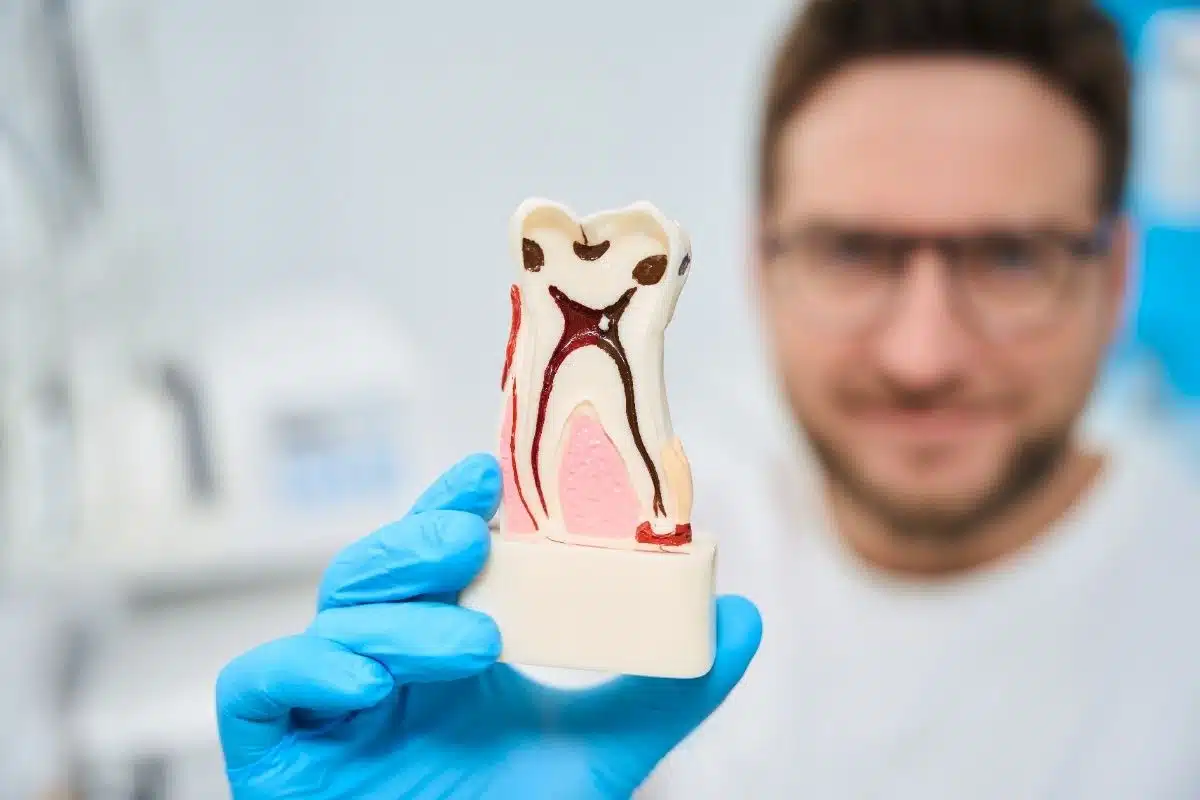
You just had a root canal, your mouth is numb, and the first thing on your mind might be whether you can smoke afterward. Many patients ask an important question after dental treatment: Can smoking after a root canal cause dry socket?
The short answer is usually no — dry socket is most commonly associated with tooth extractions, not root canal procedures. However, smoking after a root canal can still slow healing, increase irritation, worsen infection risk, and potentially lead to complications if the procedure involved an extraction or surgical treatment.
This confusion arises because some root canals are paired with other dental procedures, such as extractions or apicoectomy surgery, in which dry socket can become a real concern.
According to the American Association of Endodontists, more than 15 million root canals are performed every year in the United States.
Understanding how smoking affects healing after a root canal can help protect your oral health and prevent unnecessary pain or complications.
What Is Dry Socket?
Dry socket, also called alveolar osteitis, is a painful complication that occurs after a tooth extraction.
Normally, after a tooth is removed, a blood clot forms inside the empty socket. This clot protects the bone and nerves underneath while healing begins.
Dry socket occurs when:
- The blood clot never forms properly
- The clot dissolves too early
- The clot becomes dislodged
When this happens, exposed bone and nerves can cause severe pain.
Can a Root Canal Directly Cause Dry Socket?
In most standard root canal procedures, no.
Root canal therapy usually does not leave an open extraction socket, as the tooth remains in place. Since dry socket specifically involves an empty extraction site, traditional root canals rarely cause it.
However, dry socket may become possible if:
- The tooth is extracted instead of being saved
- Surgical endodontic treatment is performed
- A failed root canal leads to extraction later
- Smoking interferes with healing after oral surgery
This distinction is important because many patients confuse post-root-canal pain with dry socket symptoms.
Why Smoking After Dental Procedures Is Risky
Even though dry socket is mainly linked to extractions, smoking after a root canal is still strongly discouraged.
Smoking can:
- Slow healing
- Reduce blood flow
- Increase inflammation
- Irritate gum tissue
- Increase infection risk
- Delay recovery
- Causes pain and sensitivity
Nicotine restricts blood vessels and reduces oxygen delivery to healing tissues.
The American Association of Endodontists notes that smokers are nearly twice as likely to require root canal treatment compared to nonsmokers.
Smoking and Healing Response
Nicotine reduces healthy circulation needed for healing:
y=e−x representing reduced healing efficiency with increased smoking exposurey=e^{-x}\text{ representing reduced healing efficiency with increased smoking exposure}y=e−x representing reduced healing efficiency with increased smoking exposure
This slower healing response may increase discomfort and prolong recovery after dental procedures.
Can Smoking Cause Dry Socket After a Tooth Extraction?
Yes. Smoking is considered one of the leading risk factors for dry socket after tooth extractions.
According to Medical News Today, smoking may increase dry socket risk because the suction motion can dislodge the blood clot, and tobacco chemicals may impair healing.
Research discussed by Healthline found that smokers experienced dry socket at much higher rates than nonsmokers after extractions.
Why Suction Matters
When you inhale cigarette smoke, the suction pressure inside the mouth may loosen the blood clot protecting the surgical site.
This is why dentists also warn patients to avoid:
- Drinking through straws
- Vaping
- Forceful spitting
- Aggressive rinsing
The MedlinePlus medical encyclopedia lists smoking and suction-related activities as major dry socket risk factors.
What Happens If You Smoke After a Root Canal?
While smoking may not directly cause dry socket after a standard root canal, it can still trigger complications.
Possible effects include:
- Increased Pain: Smoking can irritate sensitive gum tissue and inflamed nerves following treatment.
- Delayed Healing: Nicotine slows circulation, which may increase recovery time.
- Higher Infection Risk: Tobacco products create an environment that allows bacteria to thrive more easily.
- Greater Risk of Root Canal Failure: Persistent smoking may increase the likelihood of future dental complications.
The American Association of Endodontists reports that smokers face an increased risk of needing additional dental treatment over time.
How Long Should You Avoid Smoking After a Root Canal?
Most dentists recommend avoiding smoking for at least 24–72 hours after a root canal.
If surgery or extraction was involved, longer restrictions may apply.
Some dentists recommend waiting:
- 72 hours minimum after oral surgery
- 7 days after extraction, if possible
- Longer for smokers with slow healing
The healing timeline depends on:
- Procedure complexity
- Infection severity
- Tobacco use history
- Overall health
- Gum condition
Symptoms of Dry Socket
If you recently had an extraction after a failed root canal, dry socket symptoms may include:
- Severe throbbing pain
- Pain radiating to the ear
- Bad breath
- Visible bone
- Missing blood clot
- Bad taste in the mouth
The Harvard Health Publishing notes that dry socket pain often radiates toward the ear, eye, or neck.
Is Vaping Safer Than Smoking After a Root Canal?
Not necessarily.
Vaping still creates suction pressure and exposes healing tissues to nicotine and chemicals.
Many dentists recommend avoiding:
- Cigarettes
- Vapes
- Cigars
- Marijuana smoking
- Smokeless tobacco
during the recovery period.
Tips for Healing Faster After a Root Canal
To improve recovery:
- Avoid smoking temporarily
- Follow your dentist’s instructions
- Take prescribed medications properly
- Brush gently
- Avoid chewing on the treated tooth initially
- Stay hydrated
- Eat soft foods temporarily
Good oral hygiene significantly improves healing outcomes.
Warning Signs You Should Call Your Dentist
Contact your local certified Lee’s Summit dentist immediately if you experience:
- Severe swelling
- Fever
- Persistent throbbing pain
- Pus or drainage
- Difficulty swallowing
- Pain worsening after several days
These symptoms may indicate infection or complications requiring treatment.
Can Smoking Lead to More Dental Problems Overall?
Yes.
Smoking remains one of the biggest risk factors for oral disease in the United States.
The Centers for Disease Control and Prevention states that tobacco use contributes to gum disease, tooth loss, oral cancer, and delayed healing.
Long-term smoking also increases the likelihood of:
- Root canal infections
- Gum recession
- Bone loss
- Implant failure
- Tooth discoloration
Conclusion
So, can smoking after a root canal cause dry socket?
Usually, no — because dry socket is primarily associated with tooth extractions, not standard root canal procedures. However, smoking after a root canal can still slow healing, increase discomfort, irritate tissues, and raise the risk of future dental complications.
If your treatment involved an extraction or oral surgery, smoking may significantly increase the chance of developing dry socket by disrupting the protective blood clot needed for healing.
The safest choice is to avoid smoking for as long as your dentist recommends after treatment. Protecting your mouth during recovery can reduce pain, improve healing, and help preserve your long-term oral health.
Frequently Asked Questions
- Can you get a dry socket from a regular root canal?
Usually no. Dry socket mainly occurs after tooth extractions because it involves a missing blood clot in an empty socket.
- How long should I avoid smoking after a root canal?
Most dentists recommend avoiding smoking for at least 24–72 hours, though longer may be advised after surgical procedures.
- Is vaping safer after a root canal?
Not necessarily. Vaping still creates suction and exposes healing tissues to nicotine and chemicals.
- What are the signs of dry socket?
Severe pain, visible bone, bad breath, and pain radiating toward the ear are common symptoms.
- Can smoking cause root canal failure?
Smoking may increase infection risk and slow healing, which can contribute to future dental complications or retreatment needs.
Recent Posts

May. 13, 2026
Which Foods To Eat and Avoid After Tooth Extractions?
May. 06, 2026
Can I Smoke After A Root Canal Cause Dry Socket?
Apr. 27, 2026
Can A Family Dentist Perform Root Canals and Tooth Extractions?

Apr. 20, 2026
Emergency Dental Care For Kids and Adults: What You Need To Know?

Apr. 13, 2026
Can A Cosmetic Dentist Improve Both Perfect Smile and Bad Breath?
Catagories
- Cosmetic Dentistry (33)
- Dental Care (21)
- Dental Crowns (3)
- Dental Emergency (17)
- Dental Health (9)
- Dental Implant (2)
- Dental Sealants (3)
- Dentist (6)
- Dentures (3)
- Endodontic Treatment (3)
- General Dentistry (8)
- Invisalign (12)
- Oral Care (11)
- Pediatric Dentistry (5)
- Pediatric Dentistry (2)
- Root Canal Therapy (4)
- Smile Makeover (3)
- Teeth Whitening (1)
- Tooth Extraction (8)
- Uncategorized (0)